
Training Dogs at the Highest Level: A Gulf Coast K-9 Handler’s Story
Some people grow up on the Mississippi Gulf Coast and never leave. Others leave, see parts of the world most of us only hear about, and somehow find their way right back home — carrying stories that stop you mid-sentence.
That’s exactly the case with Chris Lamey, former Air Force K-9 handler and the man behind Canine Coaching with Chris. Chris joined us in the Brown Water studio to talk dogs, deployments, and what it really means to train at the highest level.
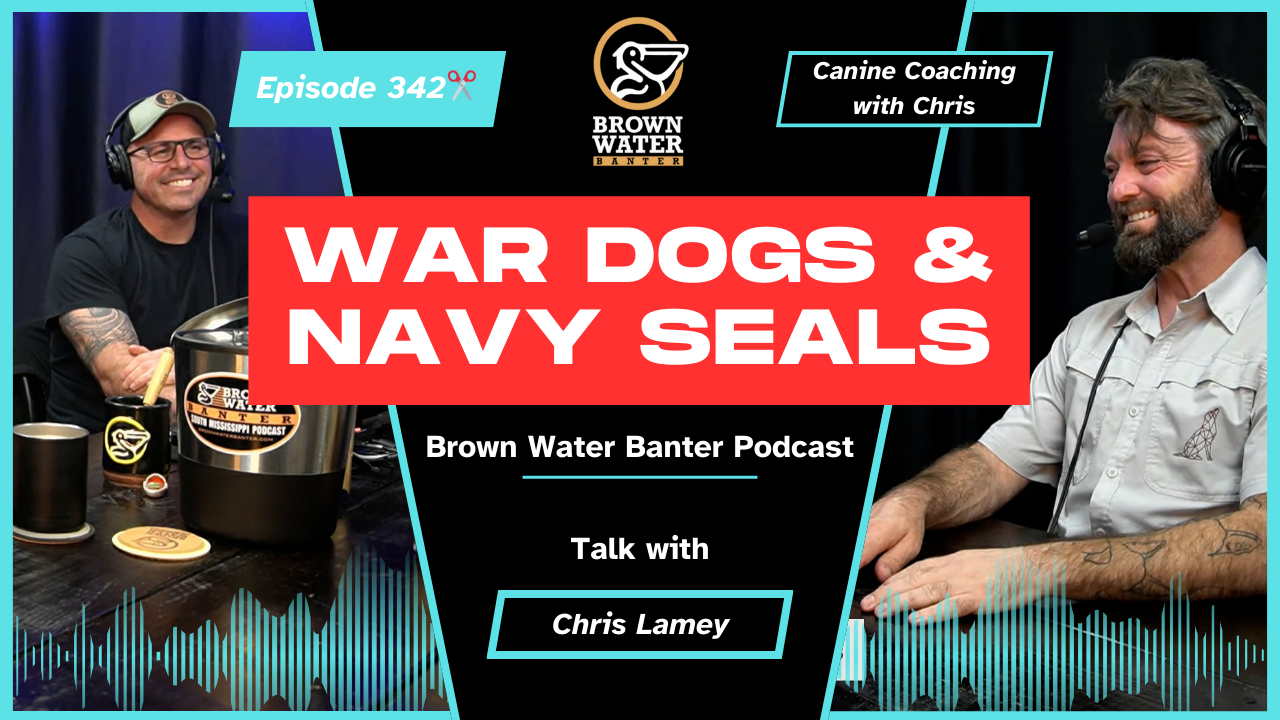
Watch a clip from our episode with Chris ⬆️
🌊 Right Place. Right Time. Six Days Before Katrina
Chris was born in Gulfport, raised in Long Beach, and graduated high school there in 2003. Like a lot of Coast folks, life pulled him in a different direction right before everything changed.
He and his wife moved to Hattiesburg six days before Hurricane Katrina made landfall — a decision that quietly altered the course of his life.
Not long after welcoming his first daughter, Chris was hit with a reality most parents recognize quickly: stability matters. Healthcare matters. Providing matters. That realization led him into the U.S. Air Force — a move that took him far from the Coast and straight into a career few people ever experience.
🪖 From Military Police to K-9
Chris didn’t walk into the military as a dog handler. He started out in military police, deploying multiple times before transitioning into the K-9 program around 2010–2011, just as the war in Afghanistan was ramping up.
What followed wasn’t a typical assignment.
Chris was placed in a specialty K-9 unit where the mission was simple and nonstop: train, deploy, repeat. No regular patrol shifts. No routine base work. Their sole focus was preparing dogs and handlers to deploy — often alongside elite units like Navy SEALs and other Tier One operators.
“Our whole job when we were home was training,” Chris explained. “That’s it. Getting ready to go.”
🐾 Meet Kitty
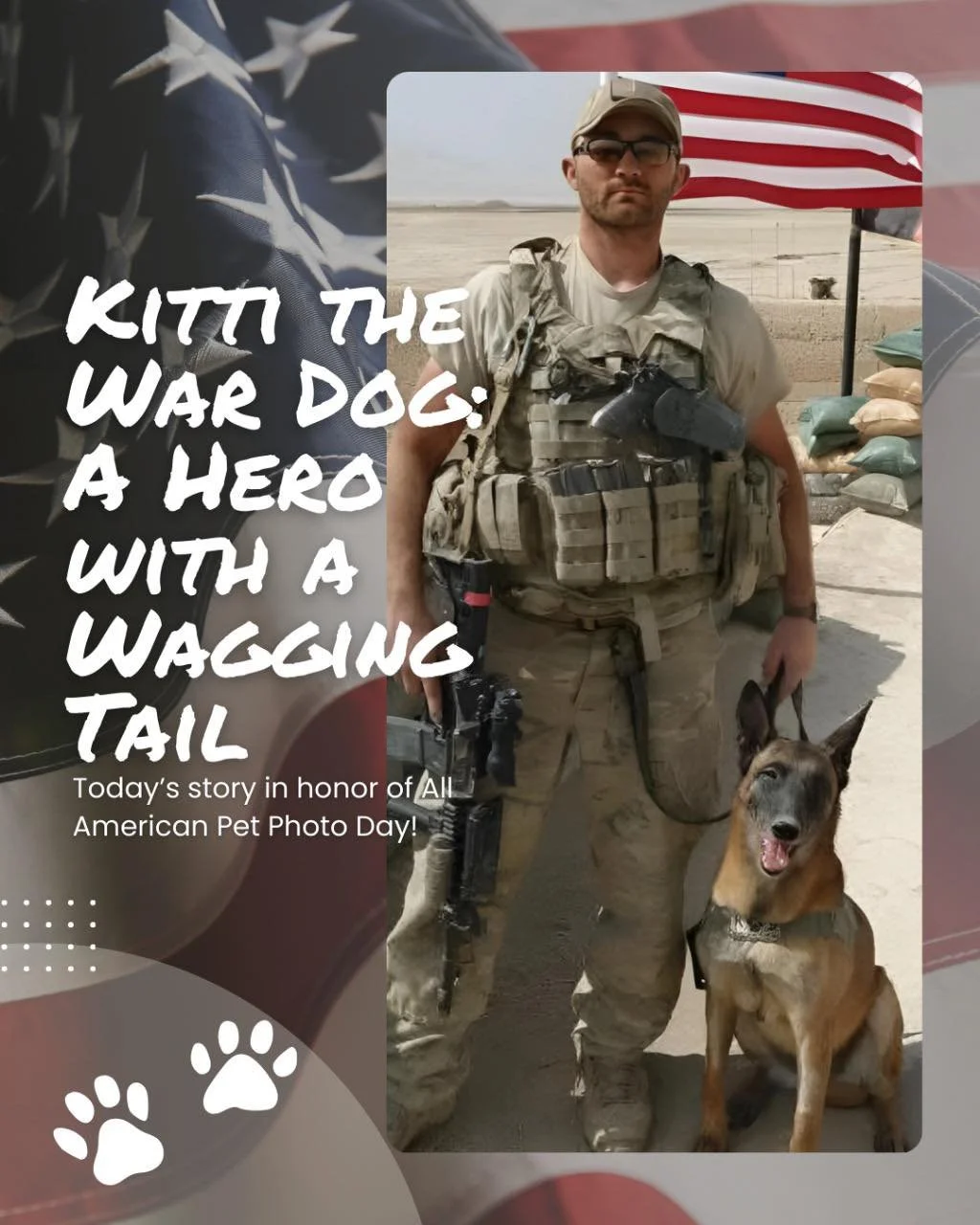
One of the most memorable parts of Chris’s story centers around Kitty, a 44-pound Belgian Malinois he deployed with in Afghanistan.
She may have been smaller than most military working dogs, but Kitty was trained for explosive detection, patrol, tracking, and handler protection — a true force multiplier in combat environments.
“When you’re deployed and things get heavy, having a dog with you changes everything,” Chris said. “She was always there.”
Kitty retired at twelve years old after a real-world bite caused a hip injury and lived with Chris until she passed at fourteen. Her impact didn’t end there. A puppy in the military breeding program was later named after her, a rare honor that speaks volumes about the work they did together.
💣 What Military Working Dogs Actually Do
Not all military dogs are trained the same. Chris broke down a key distinction most people don’t realize: drug dogs versus explosive detection dogs.
He handled a Patrol Explosive Detector Dog (PEDD), meaning his dog could detect explosives, track and apprehend suspects, and protect her handler on command.
“One dog and one handler can do the work of twenty-five people,” Chris said. “That’s why they’re called force multipliers.”
And yes — the intimidation factor is very real.
🧬 Breeding, Drive, and Choosing the Right Dog
German Shepherds and Belgian Malinois dominate military and law enforcement work for a reason: genetics, drive, and decades — sometimes centuries — of selective breeding.
Chris was blunt about something a lot of people don’t want to hear: most folks shouldn’t own a Malinois.
“They live to work,” he said. “If you’re not willing to put the time in, they’ll wreck your house and your sanity.”
His advice is practical and honest. Before choosing a dog, take a real look at your lifestyle. Don’t expect a dog to change you — especially a high-drive working breed.
🐕 From War Dogs to Family Dogs
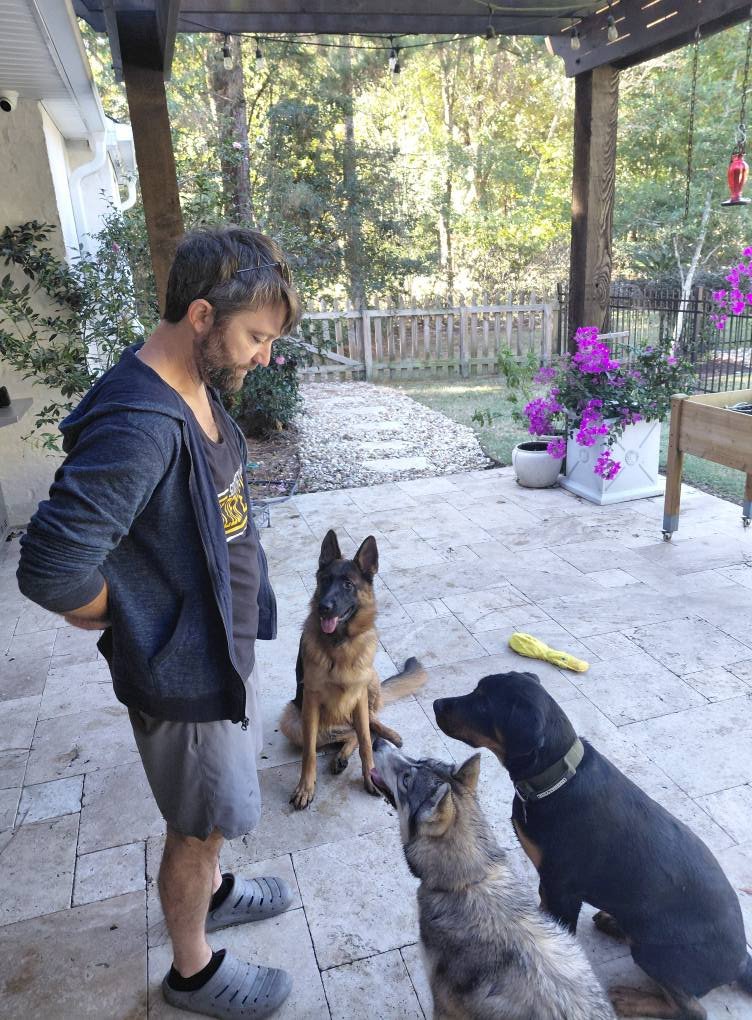
After leaving active duty, Chris brought everything he learned overseas back home to the Mississippi Gulf Coast through Canine Coaching with Chris.
The environments may be different, but the fundamentals are the same.
Dog training isn’t about domination or intimidation. It’s about communication, consistency, and understanding what a dog was built to do. Whether it’s a high-drive working breed or a stubborn family dog, most behavior issues come down to mismatched expectations and unclear leadership.
Through Canine Coaching with Chris, Chris works directly with owners to build real structure. That includes obedience training, behavior correction, confidence building, and teaching humans how to become calm, consistent leaders for their dogs.
“You can’t train a dog without training the human,” Chris explained — and that mindset drives everything he does.
🏁 Bringing It All Back Home
Chris’s path stretches from Long Beach to Afghanistan and back again, but at its core it’s about trust — trust between handler and dog, trust built through repetition, and trust earned over time.
Today, instead of training for combat zones, Chris is helping Gulf Coast families build better relationships with their dogs using the same principles that once kept people safe overseas.
Different mission. Same standards.
And whether you’re talking about a working dog or a family pet, the takeaway is the same: know what you’re working with, respect what it’s capable of, and put in the work.